

Young Lab
Eye development, robustness and disease.
Young Lab
Eye development, robustness and disease.
About Us
How do developing organs achieve the correct size, shape and symmetry despite genetic, cellular and environmental variation?
Our lab studies the mechanisms that make eye development robust. We investigate how developing eyes compensate for perturbations, how this robustness can conceal the functions of disease-associated genes, and how disruption of these mechanisms contributes to congenital eye malformations.
We combine zebrafish genetics and genetic screens with developmental and cell biology, quantitative imaging and human genomics. By connecting fundamental mechanisms of eye development with the genetics of congenital eye disease, we aim to uncover new principles governing development and identify previously hidden gene functions.
We are based at the UCL Institute of Ophthalmology in London.
Young Lab News


Our Research
Our Research
OUR RESEARCH
Development is remarkably reproducible. From embryos that vary genetically and experience constant cellular fluctuations emerge organs of remarkably consistent size, shape and function.
The eye provides a powerful system in which to understand how this robustness is achieved. Our research asks how developing eyes detect and compensate for perturbations, how the two eyes coordinate their growth to achieve bilateral symmetry, and how these mechanisms influence the effects of genetic variation.
A major implication of developmental robustness is that mutations do not necessarily reveal the functions of the genes they affect. Compensatory mechanisms can buffer genetic perturbations, allowing substantial defects at early stages of development to occur without producing an obvious final phenotype.
We exploit this principle experimentally. By combining sensitised genetic backgrounds, genetic screens and human genomics, we uncover gene functions that are normally hidden by developmental robustness and investigate their relevance to congenital eye disease.
Developmental robustness and eye size
Developing organs must not only reach an appropriate size but do so reproducibly.
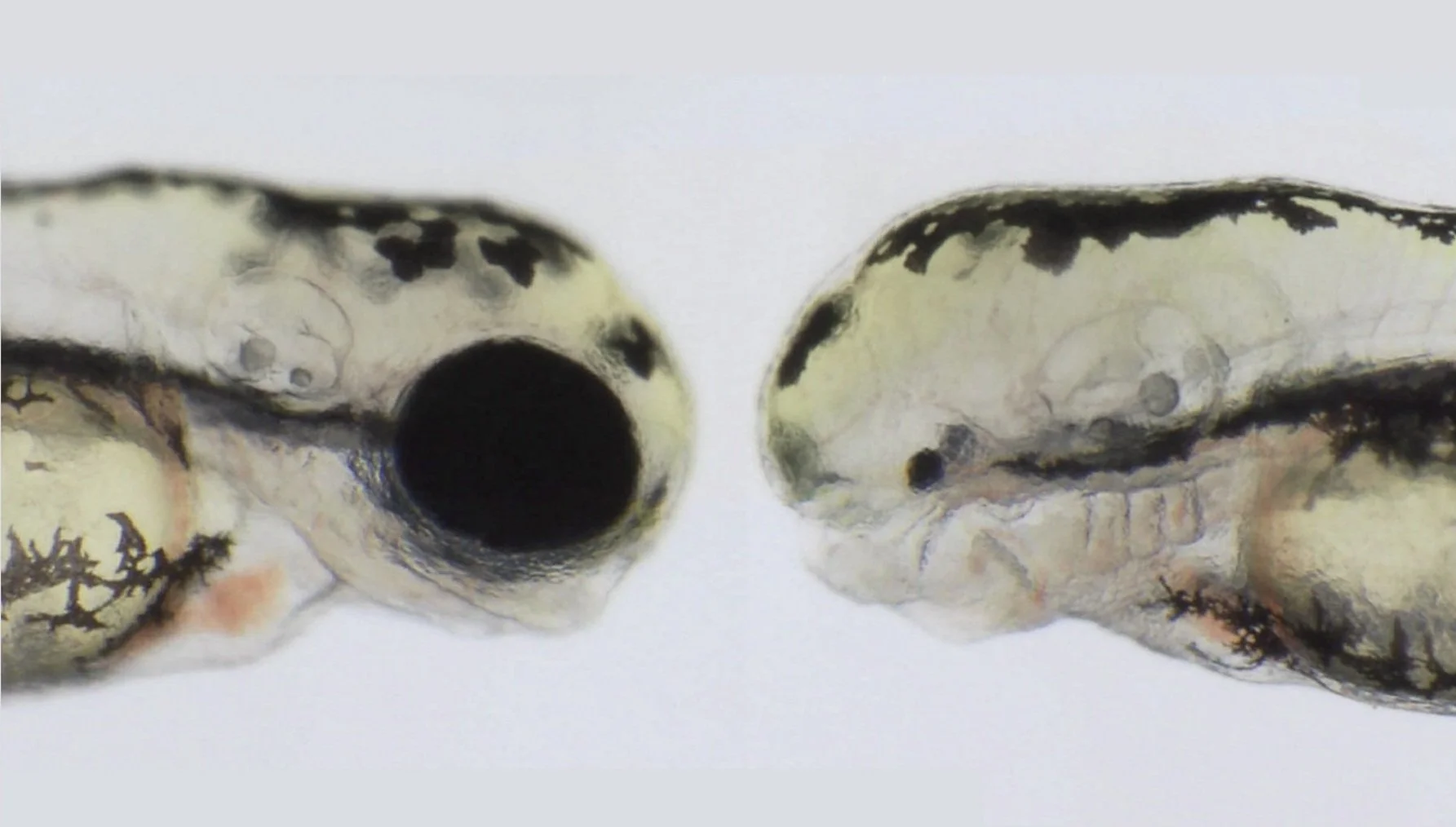
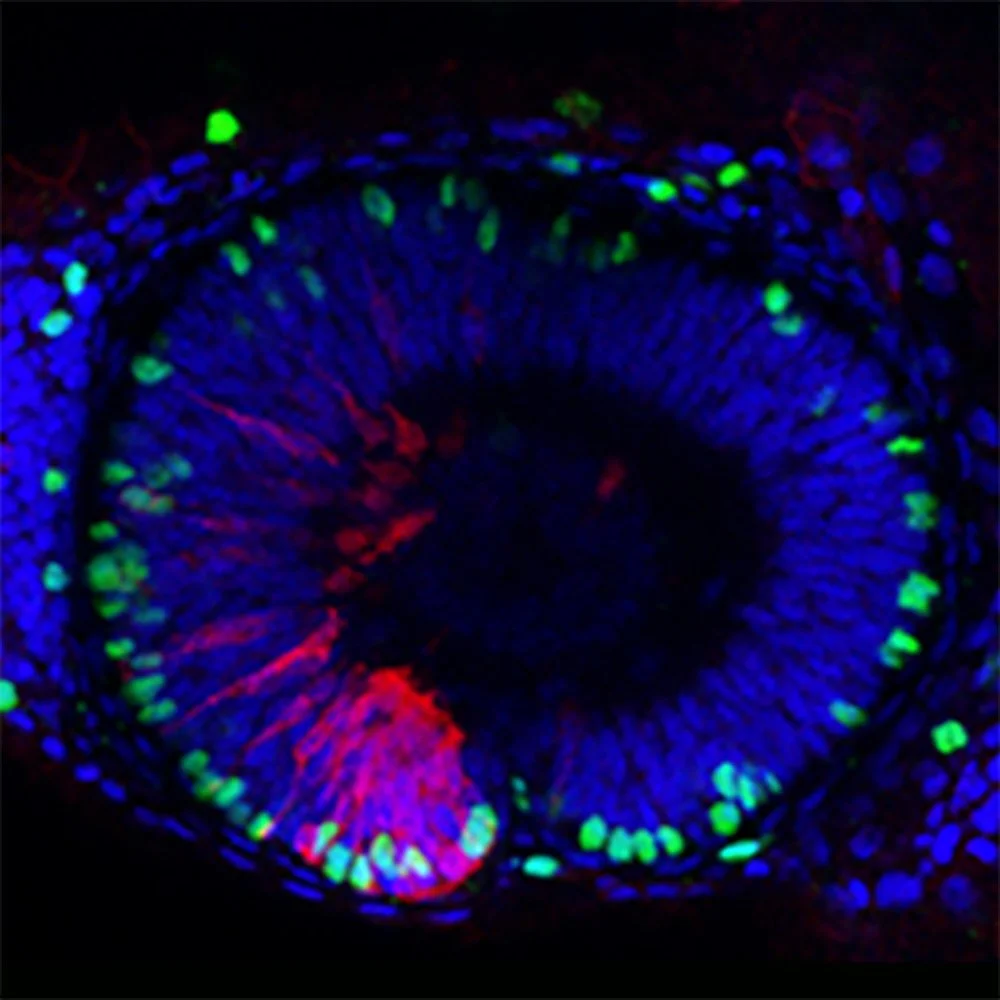
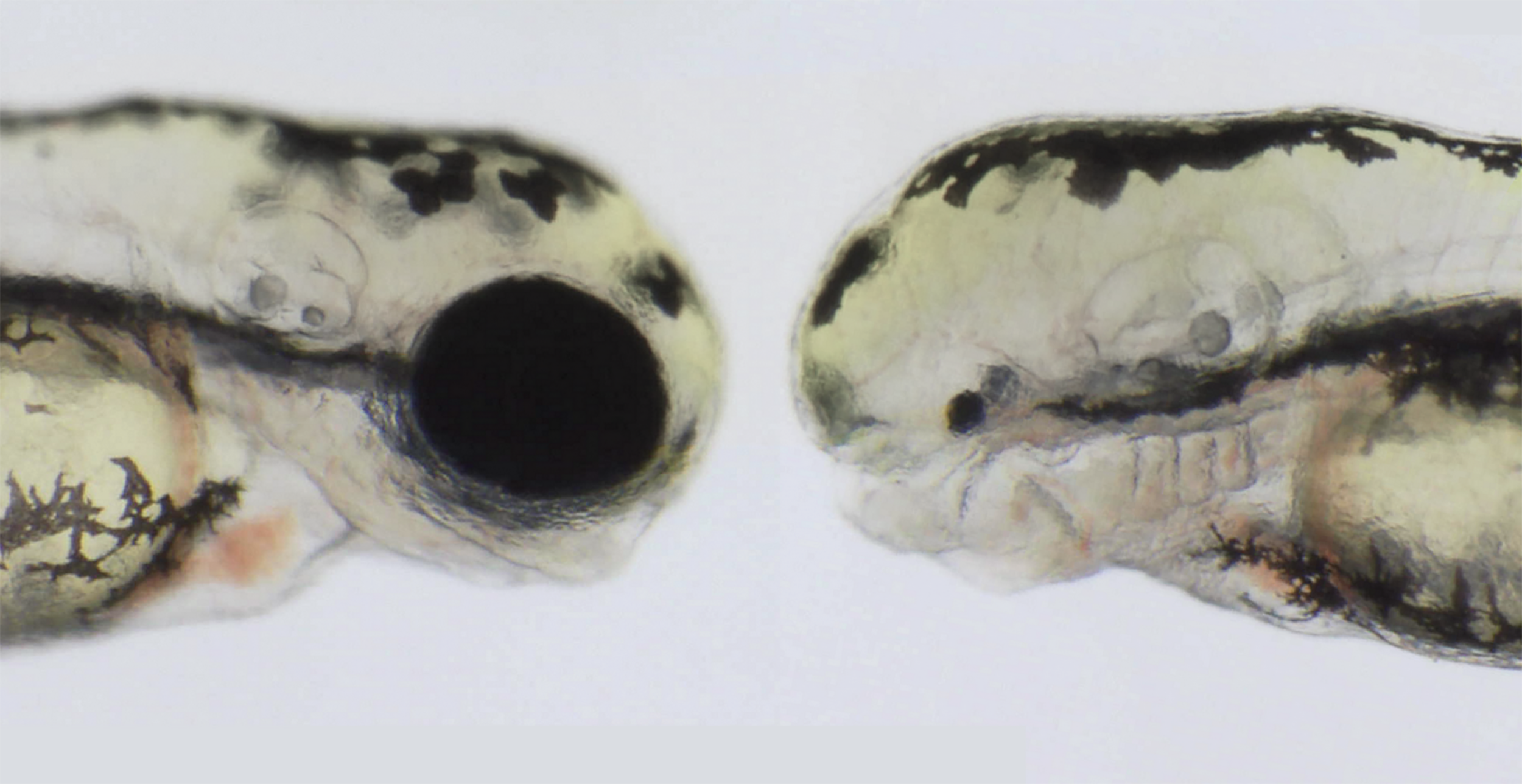
Our discovery of Eye Growth Compensation in zebrafish showed that an eye can reach its expected final size even when development begins with a substantially reduced population of progenitor cells. This recovery involves changes in the behaviour of retinal progenitors that compensate for earlier developmental defects.
We investigate the cellular, molecular and mechanical mechanisms underlying this remarkable plasticity. We are particularly interested in how proliferation and differentiation are coordinated during growth and how information is integrated across developmental time.
Together, these studies aim to reveal the principles that allow organ development to remain reproducible despite perturbation.

Revealing hidden gene function
One consequence of developmental robustness is that loss of an important developmental gene may produce surprisingly little phenotype.
This presents a major challenge for both developmental genetics and human disease research: absence of a phenotype does not necessarily mean absence of function.
We use sensitised genetic backgrounds to overcome this problem. By reducing the buffering capacity of the developing eye, we can reveal genetic interactions and developmental functions that remain hidden under normal conditions.
Using large-scale genetic screens in zebrafish, we apply this approach to genes associated with congenital eye malformations and to broader components of developmental signalling networks.
Our goal is not simply to identify genes that cause eye defects, but to understand the genetic architecture that makes development robust, and to use that knowledge to uncover previously inaccessible biology.
Genetics of anophthalmia and microphthalmia
Anophthalmia and microphthalmia (A/M) are severe congenital eye malformations in which one or both eyes are absent or abnormally small. Despite major advances in genomic medicine, most affected families still do not receive a molecular diagnosis.
We investigate the genetic basis of A/M using whole-genome sequencing data from rare-disease cohorts, including the Genomics England 100,000 Genomes Project.
Our work combines systematic gene curation with analysis of coding, splice and structural variants and computational approaches for variant interpretation. We are increasingly extending these approaches to investigate genomic variation beyond protein-coding sequences.
Candidate genes and variants are then connected back to developmental biology. Using zebrafish, including sensitised genetic backgrounds, we test their functions during eye formation and investigate the developmental mechanisms disrupted by disease-associated variation.
This creates a two-way interaction between human genetics and developmental biology: patient genomics identifies new biology, while developmental experiments provide evidence with which to interpret genomic variation.

Outreach
Outreach
Outreach
Developmental biology provides some of the most striking examples of how fundamental research can illuminate human disease.
We are committed to communicating this science beyond the laboratory and to engaging with patients, families, students and the wider public about how studying embryonic development can help us understand congenital disorders.
Our research was featured in a documentary presented by Professor Alice Roberts exploring developmental biology research across the UK. The film follows researchers working with different experimental systems to understand how embryos form and how discoveries in developmental biology can ultimately influence medicine.
People
People
Current Lab Members
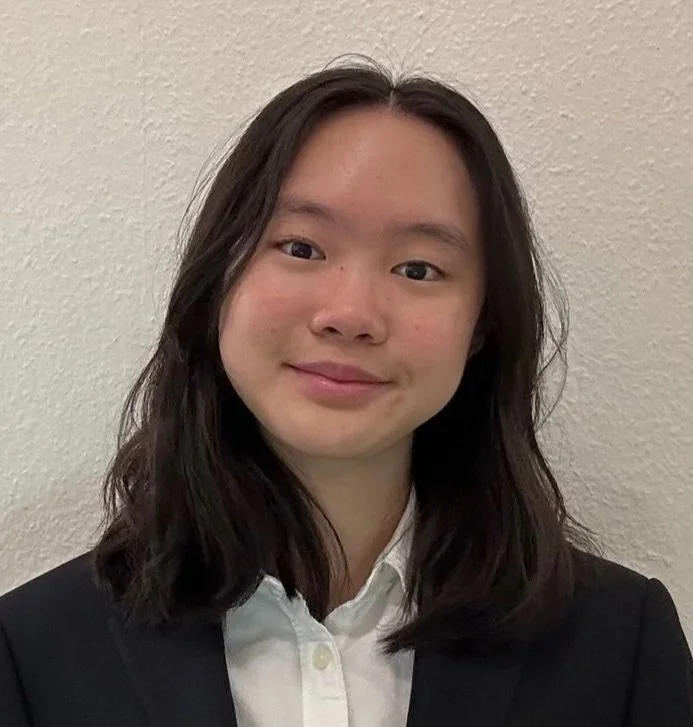
Meet the team
The Young Lab brings together developmental biology, genetics, genomics and quantitative approaches to understand how robust eye development is achieved and why it sometimes fails.
Our team includes researchers working across fundamental eye development, zebrafish genetics and congenital eye disease.



Alumni
We are proud of the students and researchers who have trained in the Young Lab and gone on to positions in research, medicine and other careers.
Alexis Wong - Summer Student (University of Edinburgh) (2026)
Byron Wang - MSc Bioscience Research & Development, UCL (2025-26)
Oliwia Sawicz - MSc Genetics of Human Disease,UCL (2025-26)
Siyu Jiang- MSc Neuroscience, UCL(2025-26)
Dr Aitor Bañon - Postdoc (Moorfields Eye Charity Project) (2024-26)
Tarini Puri- Final Year BSc Biomedical Sciences Project, UCL (2025-26)
Katherine Cid - Lab Manager/Research Assistant,UNAB, Chile (2024-26)
Gonzalo Mellado - Marine Biologist-Lab Technician, UNAB, Chile (2025-26)
Cesar Valencia - Marine Biology undergraduate project, UNAB, Chile (2025)
Haowen Xue - UCL Biomedical Sciences, Summer Project.(2025)
Lucas Spink - BSc Biomedical Sciences undergraduate project, UCL (2024-25)
Lean Abahreh - MSc project UCL - Genetics of Human Disease (2024-25)
Cristian Aedo - Biotechnology undergraduate project, Universidad Santo Tomas, Chile (2023-24)
María Elisa Cuevas - Biotechnology Engineering undergraduate project, Universidad Católica, Chile (2023-24)
Pablo Paillalí - Research Assistant (2023-24)
Peilin Chen - BSc Biomedical Sciences undergraduate project, UCL (2023-24)
Dr Manuela Lahne - MRC project Postdoc (2023-24)
Robin Hayes - MSc project UCL - Genetics of Human Disease (2022-23)
Karthika Jeganathan –MSc project UCL - Genetics of Human Disease (2021-22)
Dr Montserrat Olivares – Postdoc, EMBO short-term fellow (2021)
Aphena Huang – MSc project UCL - Genetics of Human Disease (2020-21)
Collaborators
Our work is highly collaborative and brings together expertise in developmental biology, human genetics, genomics, biophysics and disease modelling.
Gavin Arno (Greenwood Genetic Center, US)
Brian Brooks (NIE, US)
Genomics England (UK)
Lev Parsov (U. Michigan, US)
Florencia Cavodeassi (St George's University, UK)
Juan Ramon Martinez-Morales (CABD, Seville, Spain)
Alison Hardcastle (Institute of Ophthalmology - UCL)
Publications
Publications
Selected Publications
Our publications span developmental robustness, Wnt signalling, zebrafish genetics and the genetics of congenital eye disease.
Mara I. Maftei, Lucas G.N. Spink, Oriol Gracia Carmona, Simona Mikula Mrstakova, Lean Abahreh, Robin Hayes, Aitor Banon, Maria Elisa Cuevas, Katherine Cid, Raul Araya-Secchi, Franca Fraternali, Jing Yu, Gavin Arno, Rodrigo M. Young (2025)
Refining the genetic landscape of anophthalmia and microphthalmia: a comprehensive framework with deep learning and updated gene panels
medRxiv 2025.08.26.25334245; doi: https://doi.org/10.1101/2025.08.26.25334245
Neelathi UM, Ullah E, George A, Maftei MI, Boobalan E, Sanchez-Mendoza D, Adams C, McGaughey D, Sergeev YV, Ai Rawi R, Naik A, Bender C, Maumenee IH, Michaelides M, Tan TG, Lin S, Villasmil R, Blain D, Hufnagel RB, Arno G, Young RM, Guan B, Brooks BP. (2025)
Variants in NR6A1 cause a novel oculo vertebral renal syndrome.
Nat Commun. 2025 Jul 3;16(1):6111. doi: 10.1038/s41467-025-60574-y.
Monfries C. Carter, C, Ataliotis P, Bseisu A, Shaikh M, Hernández-Bejarano M, Fourteia M, Maftei MI, Young RM, Wilson SW, Gestri G and Cavodeassi F. (2025)
fzd5 zebrafish mutants behave as a sensitised genetic background prone to develop microphthalmia and coloboma.
Dis Model Mech. 18 (6): dmm052284. doi.org/10.1242/dmm.052284.
Powell, G.T., Faro, A., Zhao, Y., Stickney, H., Novellasdemunt, L., Henriques, P., Gestri, G., Redhouse White, E., Ren., J., Lu, W., Young, R.M., Hawkins, T.A., Cavodeassi, F., Schwarz, Q., Dreosti, E., Raible, D.W., Li, V.S.W., Wright, J.W., Jones, Y. and Wilson, S.W. (2024)
Cachd1 interacts with Wnt receptors and regulates neuronal asymmetry in the zebrafish brain.
Science. 384(6695):573-579. doi: 10.1126/science.ade6970.
Young, R.M,* Cavodeassi, F., Hawkins, T.A., Stickney, H.L., Schwarz, Q.P., Lawrence, L.M., Wierzbicki, C., Cheng, B.Y.L., Luo, J., Ambrosio, E.M., Klosner, A., Sealy, I.M., Rowell, J., Trivedi, C.A., Bianco, I.H., Allende, M.L., Busch-Nentwich, E.M., Gestri, G. and Wilson, S.W. (2019) Compensatory mechanisms render Tcf7l1a dispensable for eye formation despite its cell-autonomous requirement in eye field specification.
eLife doi:10.7554/eLife.40093. *Co-corresponding author.
Young, R.M,* Ewan, K.B., Ferrer, V.P., Allende, M.L., Godovac-Zimmermann, J., Dale, T.C., Wilson, S.W. (2019)
Developmentally regulated tcf7l2 alternative splice variants mediate transcriptional repressor functions during eye formation.
eLife doi:10.7554/eLife.51447. *Co-corresponding author.
Holt, R.J.*, Young, R.M.*, Crespo, B., Ceroni, F., Curry, C.J., et al. (2019)
De Novo Missense Variants in FBXW11 Cause Diverse Developmental Phenotypes Including Brain, Eye, and Digit Anomalies.
Am J Hum Genet. 105(3):640-657. doi: 10.1016/j.ajhg.2019.07.005. *Equal contribution
For a complete and up-to-date list of publications, visit Rodrigo Young's ORCID / Google Scholar profile.
Join Us/Contact
Join Us/Contact
Join Us
We are always keen to hear from researchers who share our interest in developmental biology, genetics and congenital eye disease.
Our projects span zebrafish developmental genetics, genetic screens, quantitative imaging and human genomics, with a common goal: understanding how robust development is achieved and uncovering biological functions that conventional genetic approaches can miss.
Prospective PhD students, postdoctoral researchers, MSc students and research visitors are welcome to contact us to discuss potential projects and funding opportunities.
Contact Us
Dr Rodrigo Young
UCL Institute of Opthalmology
11-43 Bath Street
London
EC1V 9EL

Follow the lab on Bluesky
@younglab.bsKY.SOCIAL

Our Resources

Discover Zebrafish Research Lines
Shared academic catalogue of mutant and transgenic zebrafish lines held across UK research laboratories, supporting discovery, reuse and responsible collaboration.
Our Research is funded by